

Throwing IS the sport. There’s no running with the disc. Throwing is everything. Every point has at least 2 throws: the pull, and at least one offensive throw.
It’s been wrong this whole time.
Think about how you throw any time you practice.
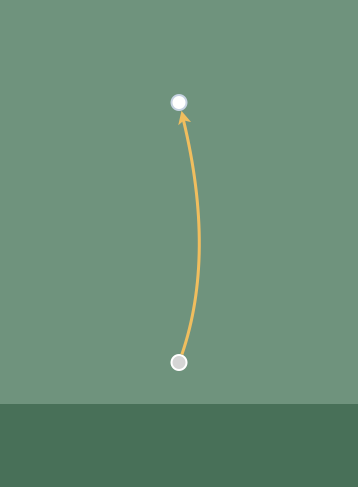
So, you train your brain to do EXACTLY THE WRONG THING.
“What’s that?”, you ask.
To see a target here, let’s say 20 yards…

And to execute this throw:
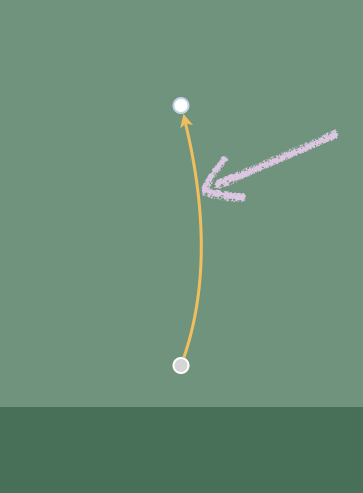
Let’s say a flat flick, thrown from the center of body, down the middle. Depending on where you’re standing on the field, you’ll also train your entire body: vision, muscle memory, recall, to execute this throw based on seeing and feeling this situation. I’ll come back to this.
And, most of the time, the disc is arriving 200-300% too fast. And, if the receiver is inexperienced, they won’t say: “Hey—that’s coming in too fast,” because they’re concerned about sounding “soft” or “like a noob”. And, if the receiver is experienced, they won’t say: “Hey—too fast,” because they’re concentrating on how to be a better RECEIVER and catch crappy throws—which is, of course, commendable, and what you want from your veterans, but it doesn’t give you the vital feedback that your throws are all too fast.
How do you know they’re too fast?
Because I see it when you play, and the people flinching and wincing around you.
And, also, because if you’ve never had someone who was responsible for helping you get better, then no one was being honest with you.
And, finally, because every beginner quickly realizes that the faster the disc travels, the more stable it becomes.
Every beginner realizes that the the faster they throw the disc, the more stable it is.
So, they begin to MASK THROWING ERRORS by throwing the disc faster.
It’s like discovering that you’re bad on roller skates, but that if you go faster, you feel more stable—temporarily. And then ignoring that your crashes are worse, while also not realizing that you’re not becoming a better skater, but just feeling more “balanced” in those brief periods of “stability”.
Technical Bits
And almost all non-competitive throwers go through this progression. Other more experienced players (but maybe inexperienced coaches) tell new players to throw short throws, which is wrong. Short throws are hard. For every person, there’s a natural range which is sort of stable. This is the range you start with. And the first thing you do is correct the stability, while not emphasizing arm speed. As you add stability by adding spin, you also add speed, just from the fact that a disc undergoes precession in your hand because your hand imparts spin to the disc from your wrist, while the disc is also spinning on its axis. That precession adds speed naturally.
What is “precession”? Oxford American Dictionary:
the slow movement of the axis of a spinning body around another axis due to a TORQUE (such as gravitational influence) acting to change the direction of the first axis. It is seen in the circle slowly traced out by the pole of a spinning gyroscope.
Wait. Go back. What’s wrong with my throw?
Let’s go back. Your body is associating this sense memory with this throw:
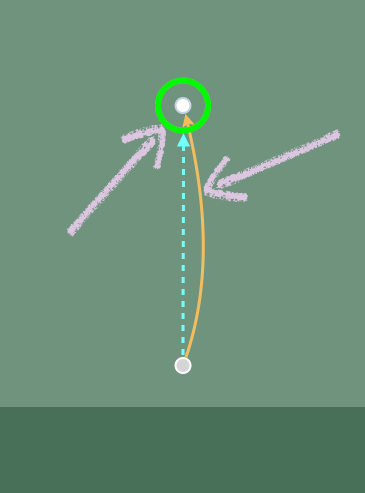
And let’s just say that throw is a flat flick (yellow curved arrow), thrown from the center of body, down the middle; i.e., straight down the axis which you’re looking (dotted cyan line). So, you’re training your entire body: vision, muscle memory, recall, to execute this throw based on seeing and feeling this situation.
Which is TOTALLY WRONG.
I don’t get it. What’s wrong?
Because that’s not what’s actually happening in competition. When you practice static throwing, you are training your eyes and brain to see something, and then to respond. But, you’re not doing static throwing while playing. In other words, when you see this:
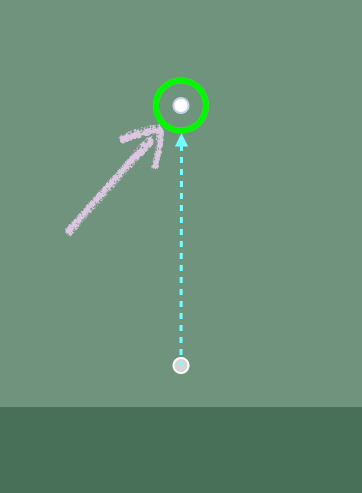
You’re throwing that flat flick, center of body, down the middle.
Except that when you see this while playing, what you’re throwing to is this:
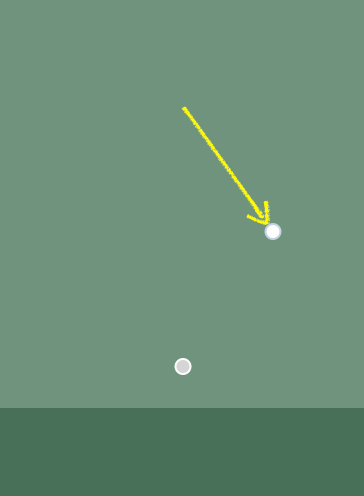
Which means the throw you’ve trained your body to do is going to the WRONG place, at the WRONG speed, with the WRONG shape, from the WRONG point:
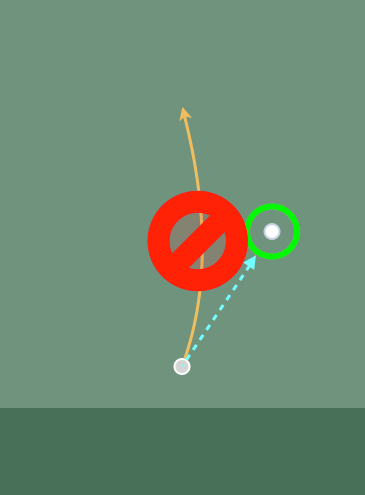
Which means when you see this:
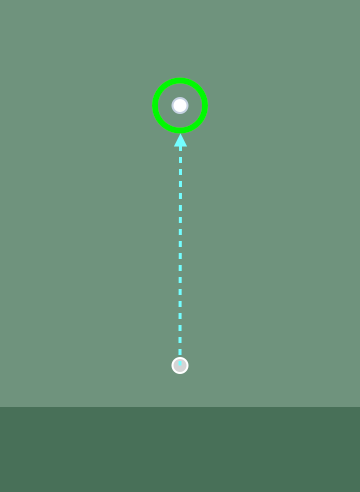
You need to be prepared to throw this:
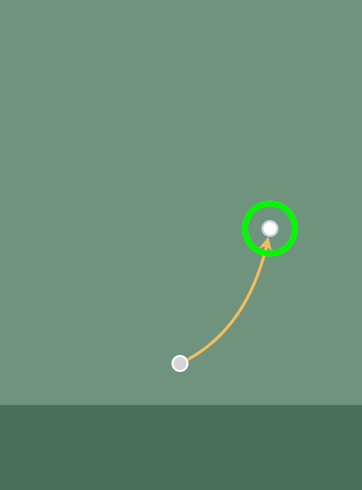
by visualizing this:
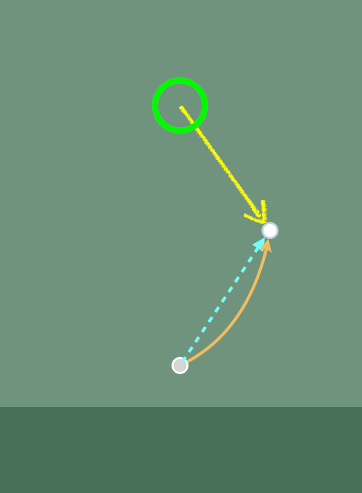
Instead of looking at the player, you look at the SPACE into which they’re cutting. And realizing that the throw you’ve trained yourself to throw via static throwing reps is…
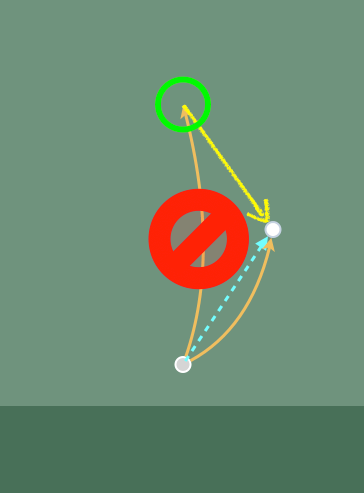
…wait for it:
TOTALLY WRONG.
That new throw:
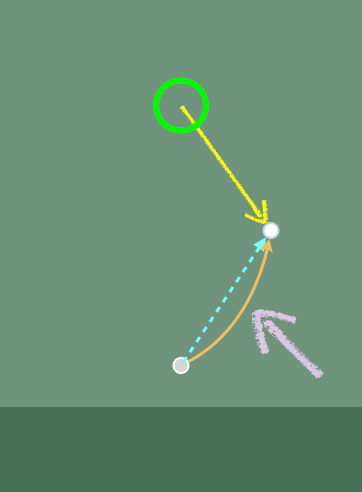
could easily be a backhand, at somewhere from 1/4 or 1/10 of the speed.
A TENTH!
If your original throw was 200% too fast, and the new distance is half the distance, that’s 1/2 of 1/2. So 1/4 speed.
If your original throw was 300% too fast, and the new distance is 1/3 the distance, that’s 1/9 speed, 900% too fast.
I’ve been doing this the whole time?

Stop training yourself to throw to the WRONG place, at the WRONG speed, with the WRONG shape, from the WRONG point.
Learn to see the field differently. When you’re doing static throwing, imagine your thrower coming in from about 20 yards away. In other words, when you’re doing this:
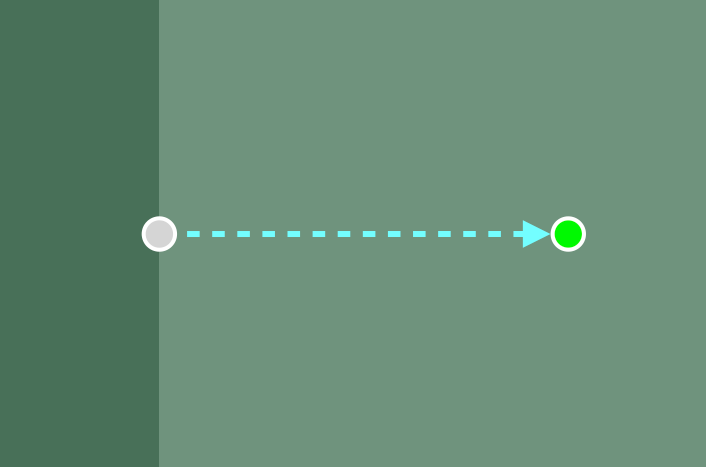
Realize that what’s triggering THAT THROW is actually something like this:

Which is why you’re throwing this:
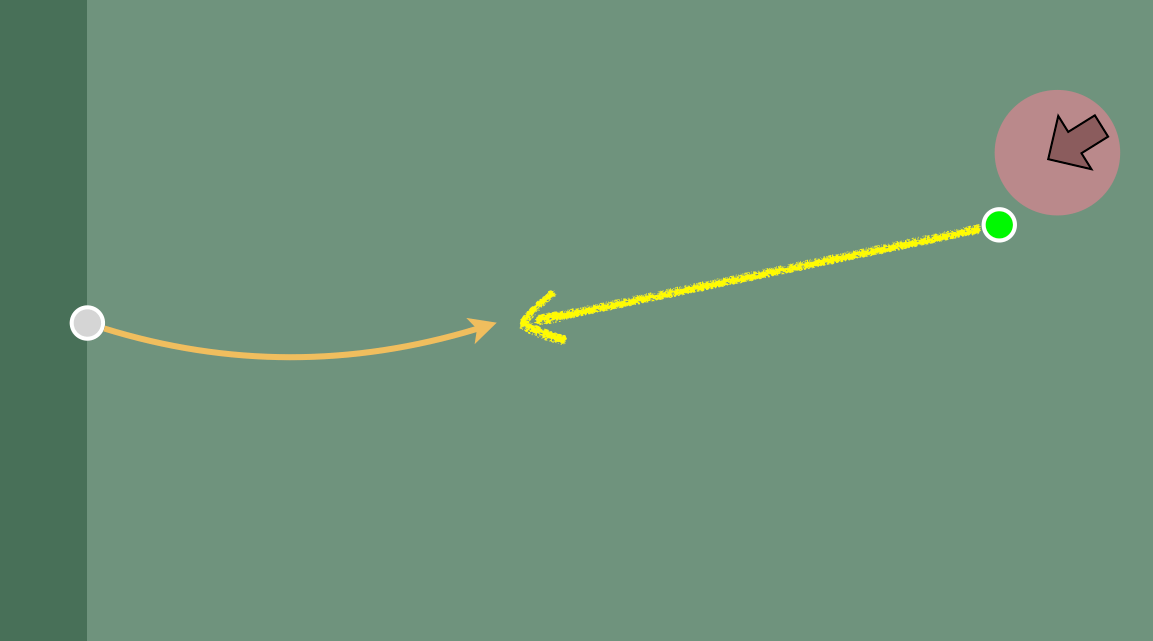
In other words, you’ll need to visualize that the situation in which you throw this in your static throwing reps:
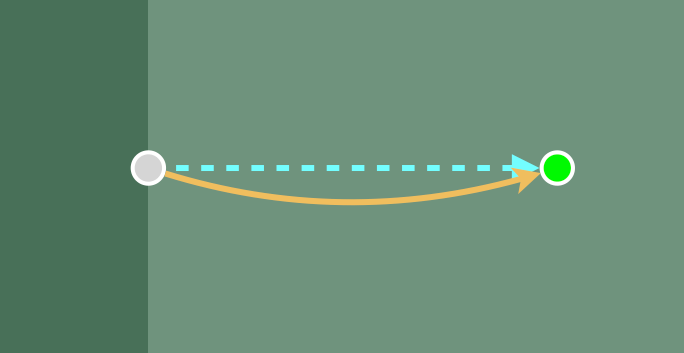
is actually a response to seeing (something like) this:
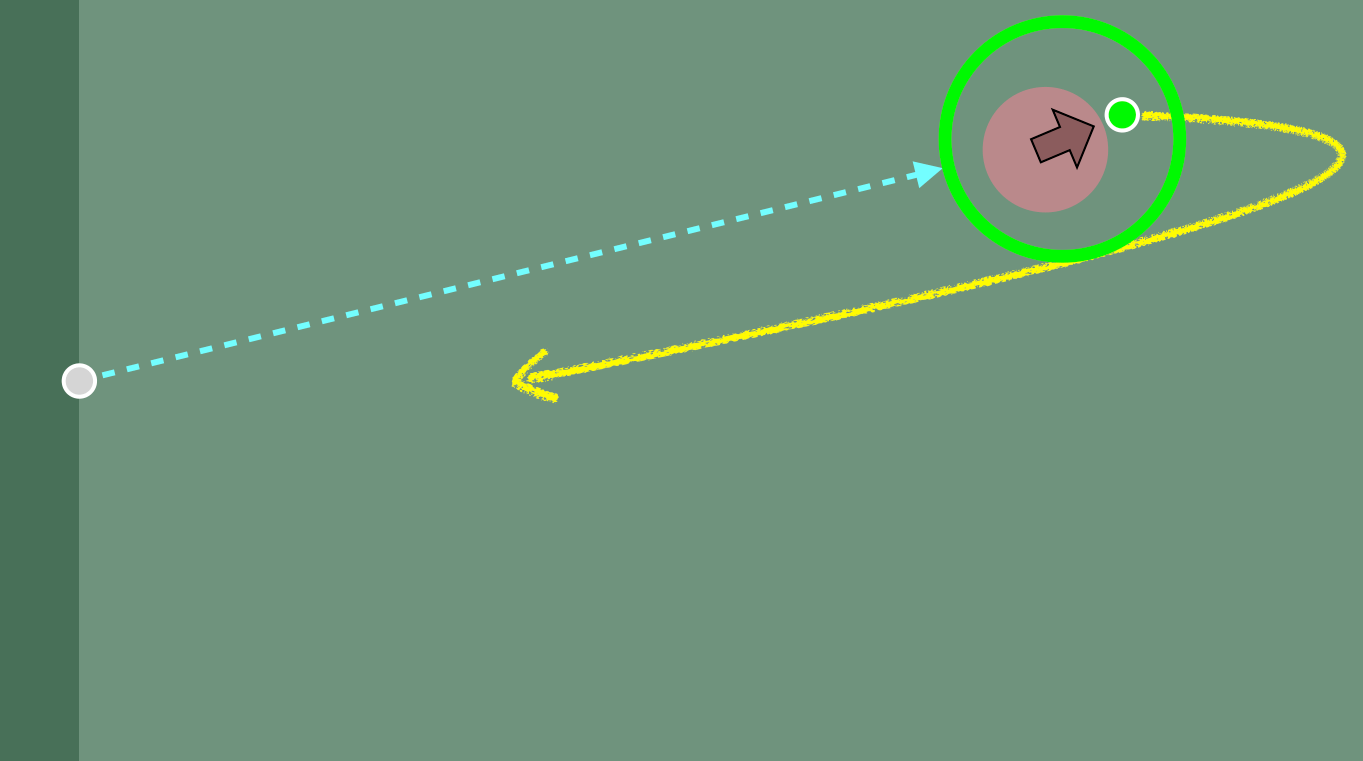
This is why your throws are too fast, and why most of the throwaways miss the target or are uncatchable lasers.